What are you looking for?

Where Language Takes Form: The Reopening of The Art Dome House in Bogota

By Juliana Suescun

The reopening of The Art Dome House in Bogota marks more than the inaguration of a new exhibition. It signals the consolidation of a space not only for displaying artworks, but for creating relationships between artists, collectors, designers, curators and audiences interested in the ways contemporary art can inhabit everyday life. Located in La Soledad, a unique neighborhood in Bogota, The Art Dome’s headquarters reopen as a living platform where exhibitions, conversations, collecting and creative exchange coexist under the same roof.

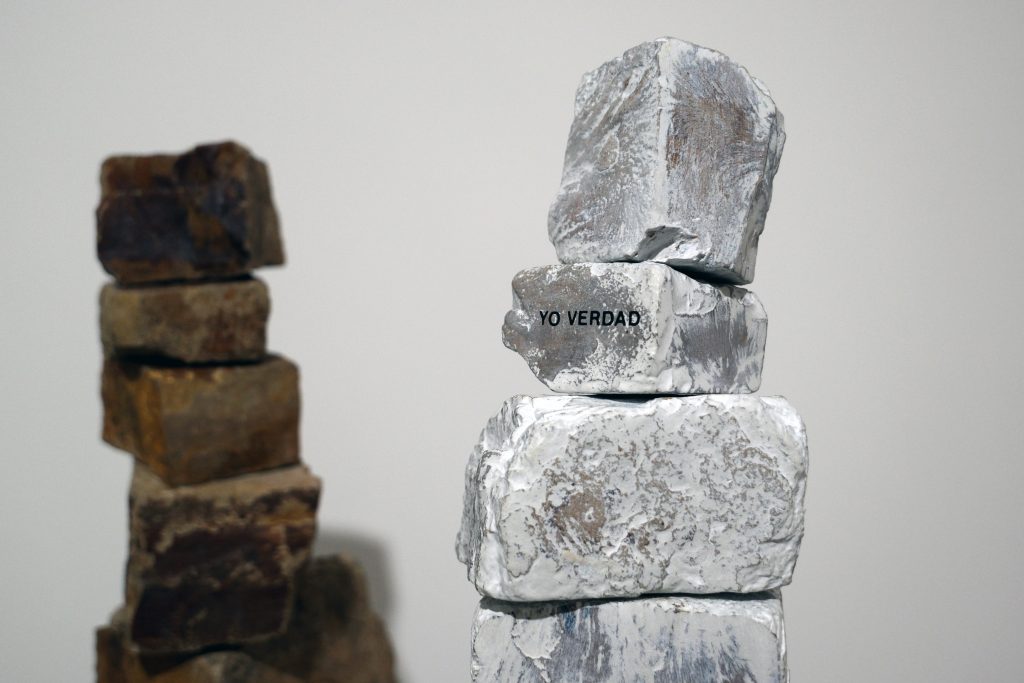
On May 7, The Art Dome opened Where the text rests, a collective exhibition features works by Ivan Argote, Angelica Chavarro, Bipasha Hayat, Adriana Ramirez and Gabriel Zea, alongside a Project Room by Paula Toro. Curated by Amy Navarrete, the exhibition proposes a reflection on text not simpli as language, but as material, gesture, inscription and sculpture.

The exhibition emerges from a fundamental idea: text does not exist independently from the surface that sustains it. Before becoming literature, narrative, or communication, writing first appeared as inscription, such as marks carved into stone, pigment on walls, traces left on physical matter in an attempt to preserve memory. Where the text rests builds from this relationship between language and materiality, asking how meaning changes according to the surface that carries it.

by Juliana Suescún
by Juliana Suescún

Rather than approaching text as something abstract or neutral, the exhibition understands language as inseparable from permanence, fragility, power, and memory. Materials such as stone or metal evoke stability and historical authority, while more vulnerable surfaces like paper or fabric shift language into intimate, emotional, and unstable territories. Yet the exhibition avoids presenting these categories as fixed oppositions. Instead, it explores the tensions that emerge when permanence and fragility coexist.

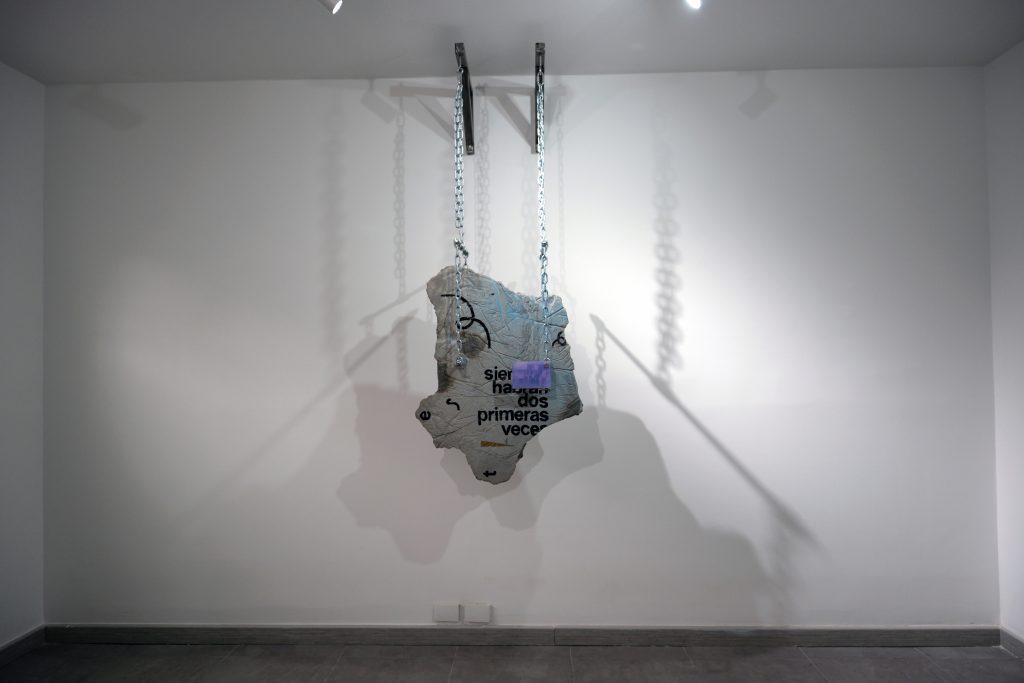
This tension becomes particularly visible in the works of Iván Argote, Gabriel Zea, and Adriana Ramírez, where language operates simultaneously as archive, structure, and residue. In Argote’s, Siempre habrá dos primeras veces, history unfolds through overlapping architectural, visual, and narrative fragments, resisting the idea of a definitive or linear account. Language appears as something constantly reconfigured between fiction, memory, and historical construction.

Gabriel Zea’s work turns toward typographic systems and administrative records, exposing the material condition of bureaucratic language once it is displaced from its functional role. In E-14, writing ceases to function transparently and instead becomes evidence, the visible remainder of systems designed to organize and classify reality.

For Adriana Ramirez, language does not simply describe the world; it actively participates in shaping it. Her pieces conceive life itself as a sculptural process in which words, encounters, and experiences leave form behind. Language becomes both a structure that supports reality and something capable of intervention and transformation.

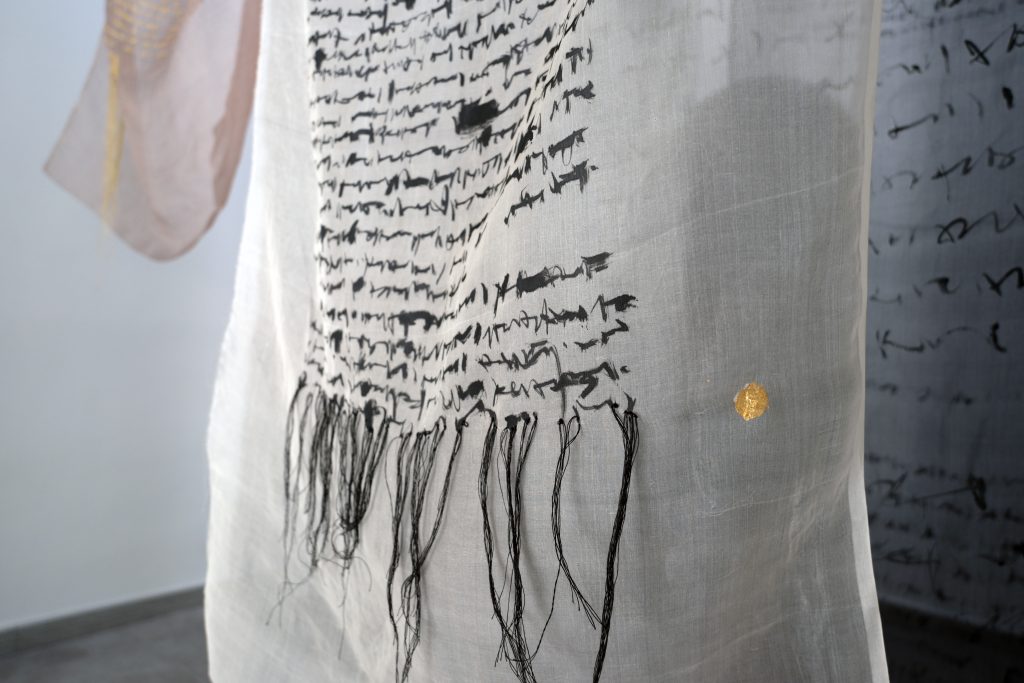
In contrast, the works of Angelica Chavarro and Bipasha Hayat shift writing toward more fragile surfaces and emotional registers. In Chavarro’s work, text functions less as description and more as a repetitive and ritual gesture through which experience is reconstructed. Hayat’s work introduces distance between what is read and what is seen, allowing memory to appear not as a stable archive, but as resonance — something that persists without ever fully settling into permanence.

by Juliana Suescún

Across the exhibition, material becomes inseparable from meaning. Stone erodes. Fabric preserves. Language survives through unstable supports that continuously transform the way it is perceived. Even the act of reading this text depends on the surface that contains it. As the curatorial text suggests, perhaps text never fully rests; perhaps it simply finds temporary places to be held.

This exhibition also represents an important moment in the evolution of The Art Dome itself. Founded as an incubator and accelerator for artists, The Art Dome has consistently worked to support contemporary artistic practices through mentorship, visibility, and interdisciplinary collaboration. With the reopening of its Bogotá headquarters, the space expands its role beyond exhibitions into residencies, workshops, mentorship programs, and cultural encounters designed to strengthen artistic community-building.

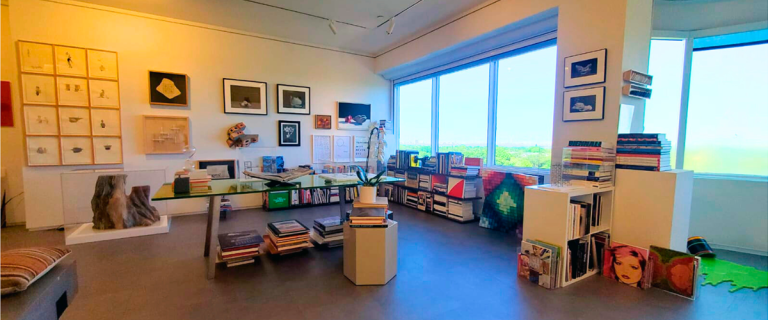
The decision to reopen in La Soledad is not incidental. Teusaquillo has long been one of Bogotá’s most historically layered neighborhoods; it’s a place where architecture, memory and cultural activity coexist in close proximity. Within this context, The Art Dome House operates simultaneously as exhibition venue, meeting point and working platform. Visitors encounter not only the exhibition itself, but also a carefully curated selection from The Art Dome collection and a small art shop that extends the experience beyond the gallery format.

What makes this reopening particularly meaningful is the way the house functions as an active environment rather than a neutral container. The space is designed to encourage encounters between collectors, designers, artists, curators, architects, and audiences interested in how art can meaningfully inhabit contemporary spaces and conversations. The exhibition becomes only one layer within a broader ecosystem of exchange.

Let’s create something extraordinary together

Share Where Language Takes Form: The Reopening of The Art Dome House in Bogota

more insights

Artist of the Month – Uta Barth

As a way to showcase our collection of artworks, we wanted to begin introducing the masters behind these pieces as our Artist of the Month. This allows us to take a closer look at the artworks in our collection and the fascinating people behind their creation.

Read more >